


Normally when we think of Augmented Reality (AR) or Virtual Reality (VR) we tend to think that it is the same thing, and the truth is that it tends to be confusing.
What are the main differences between them? Are virtual and augmented reality present in Civil Engineering?
From CivileBIM we want you to take note of the following concepts and do not forget the main differences between both technologies. We also want you to discover that both are present in Civil Engineering and that nowadays, they are already indispensable.
Concepts: AR | VR
First and foremost, it is important to be clear about the two concepts:
Augmented Reality (AR): is the set of technologies used for the user to visualize part of the real world through a technological device with added graphical information.
Virtual Reality (VR): is an environment created by a set of computer technologies and makes the user be inside this ‘fictitious environment’.
Main differences between AR and VR
Now that we have assimilated the main characteristics of each technology, it is very important to know how to differentiate between them.
AR versions the present reality and VR creates a totally different one
Augmented Reality takes advantage of the user’s environment, but modifies it, i.e., the user can recognize through the device his current reality and at the same time, receives digital information that complements what he already receives through his senses.
Virtual Reality makes the user experience a different reality, that is, thanks to VR the user can be in Cancun or Paris in a matter of seconds, or in spaces created for the best user experience.
A device always hand in hand with VR
In VR it is necessary to use a device for the user to enjoy this technology, while AR does not need a device, since with a cell phone you can already enjoy this technology.
Stereoscopy is the technology used to realize virtual reality and consists of: showing a subtly different image in each eye and, in this way, being able to enjoy 3D. Nowadays, we can also feel this fictitious reality, thanks to gloves, overalls or helmets, among others.
AR has more uses besides entertainment
VR is associated with video games or entertainment, but AR has found a niche in different sectors, such as: medicine, optics, sports, television sets, etc.
For example, thanks to AR a surgeon can perform guided surgery of complicated operations, thanks to this technology.
AR is the interaction with the product and VR is the sale
If you want to get a device with which to enjoy virtual reality, you will have to pay about 600 € on average, and from there, enjoy video games, movies, etc.
For augmented reality, you are already hand in hand with that technology and you don’t even realize it, numerous applications allow the user to change the environment.
VR and AR in Civil Engineering
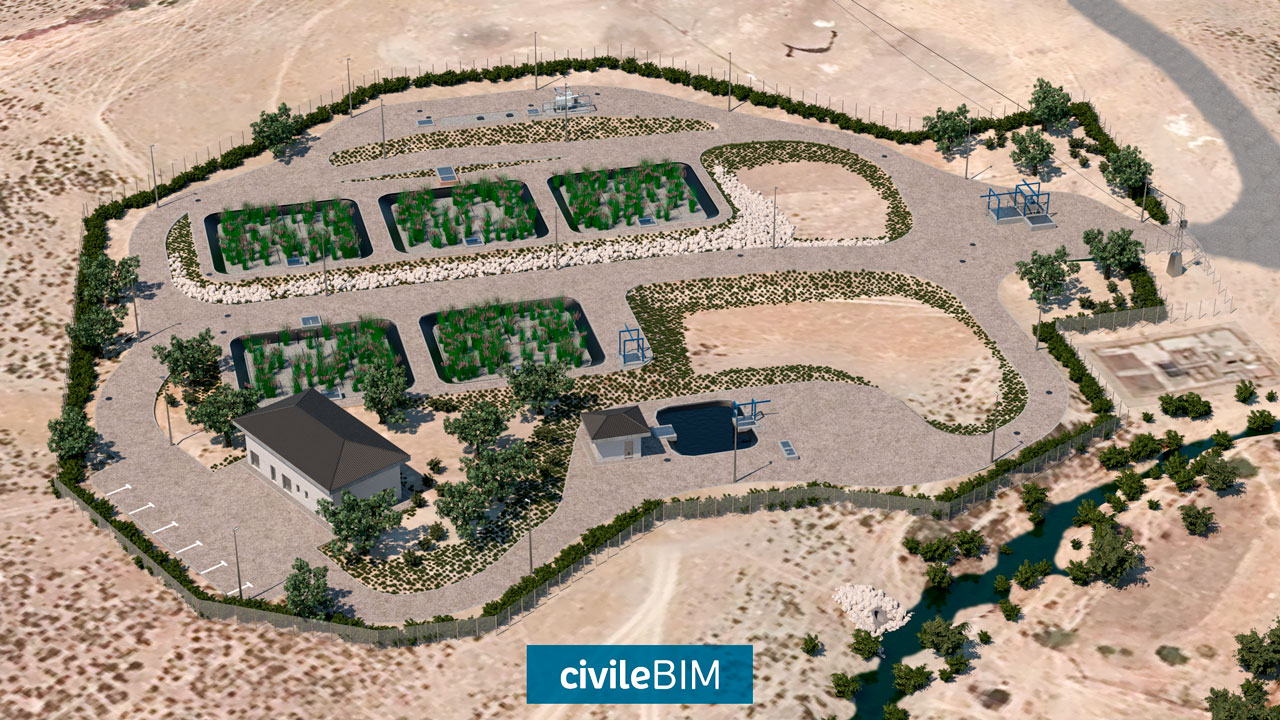
Virtual reality is one of the technologies with more projection in Civil Engineering, and thanks to this technique engineers can design and manufacture infrastructures and buildings.
VR allows us to create virtual tours, in 3D and in real time. In this way, we can visualize the projects before they are executed and we can interact within them.
Which software is the most used in the industry? Currently, Unity 3D and 3DMax.
On the other hand, augmented reality allows us to see data in real time and created graphically in a real environment, so we can interact with them in a real environment, and not fictitious as with VR.
Advantages of VR and AR in Civil Engineering
The main advantages of using virtual reality and augmented reality in Civil Engineering are:
- Interactivity and immersion
- New customer acquisition
- Facilitates decision making
- Improved team coordination
- Promotes job creation
At CivileBIM we believe that both technologies are very important and that the future really lies in them, that is why both technologies are part of our academic program of the BIM Master in Civil Engineering.